
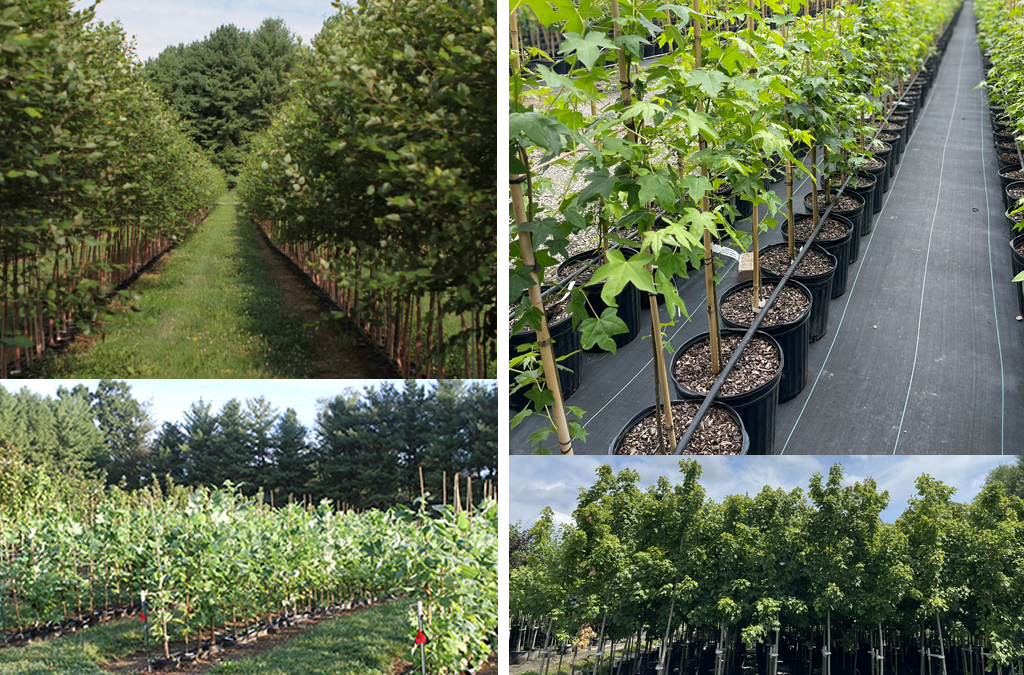
A question we hear quite often is what can I add to my yard for privacy? We’ve all seen the saying / ancient proverb “The best time to plant a tree was 20 years ago. The second-best time is now.” While trees can take a while to grow, picking a species that is faster-growing than, an Oak for example, can help to ensure future shade and eventual privacy. Never wanting to pick on the majestic Oak, let’s just add that members of the Quercus fam are *always* worth the wait!
Read on for our suggestions of Native species that are fast-growing, each with their own virtues…
In This Article
Red Maple (Acer rubrum)
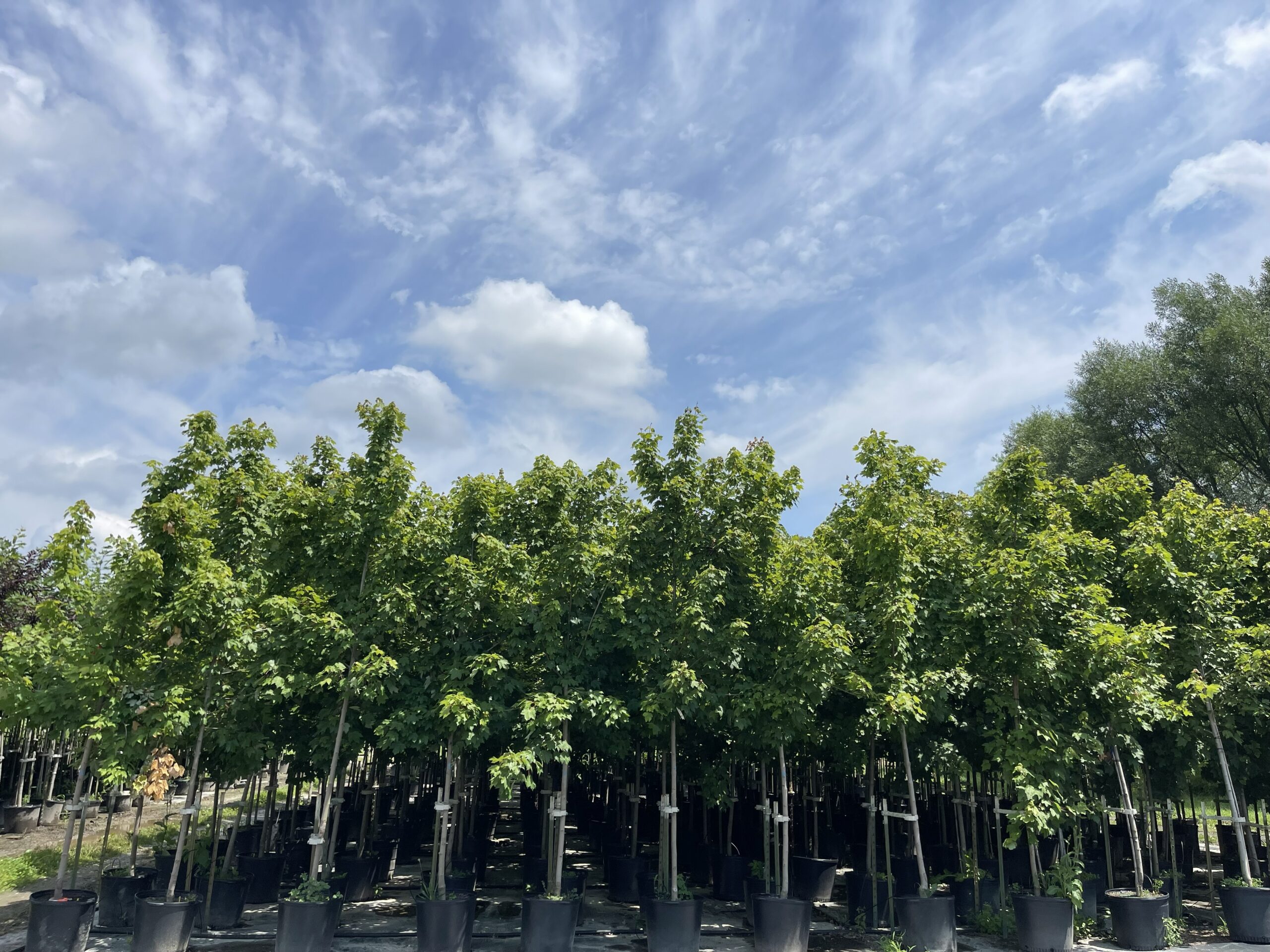
Grows up to 3 feet per year, reaching up to 40 – 60 feet. This is a popular medium–to–large fast growing shade tree that can add up to 3 feet per year, maxing out between 40 – 60 feet… Distinctive leaves are 3 – 5 lobed with pointed tips and turn a beautiful, bold red in autumn. This tree has a large range – from Canada to Florida and all the way to Texas. It is tolerant of many soil types but its preference is moist and slightly acidic. The root systems can be quite dense which keeps other plants from growing too close to the trunk. Birds love the seeds; Red maples have special value to honey bees and are also host to the Rosy maple moth.
River Birch (Betula nigra)
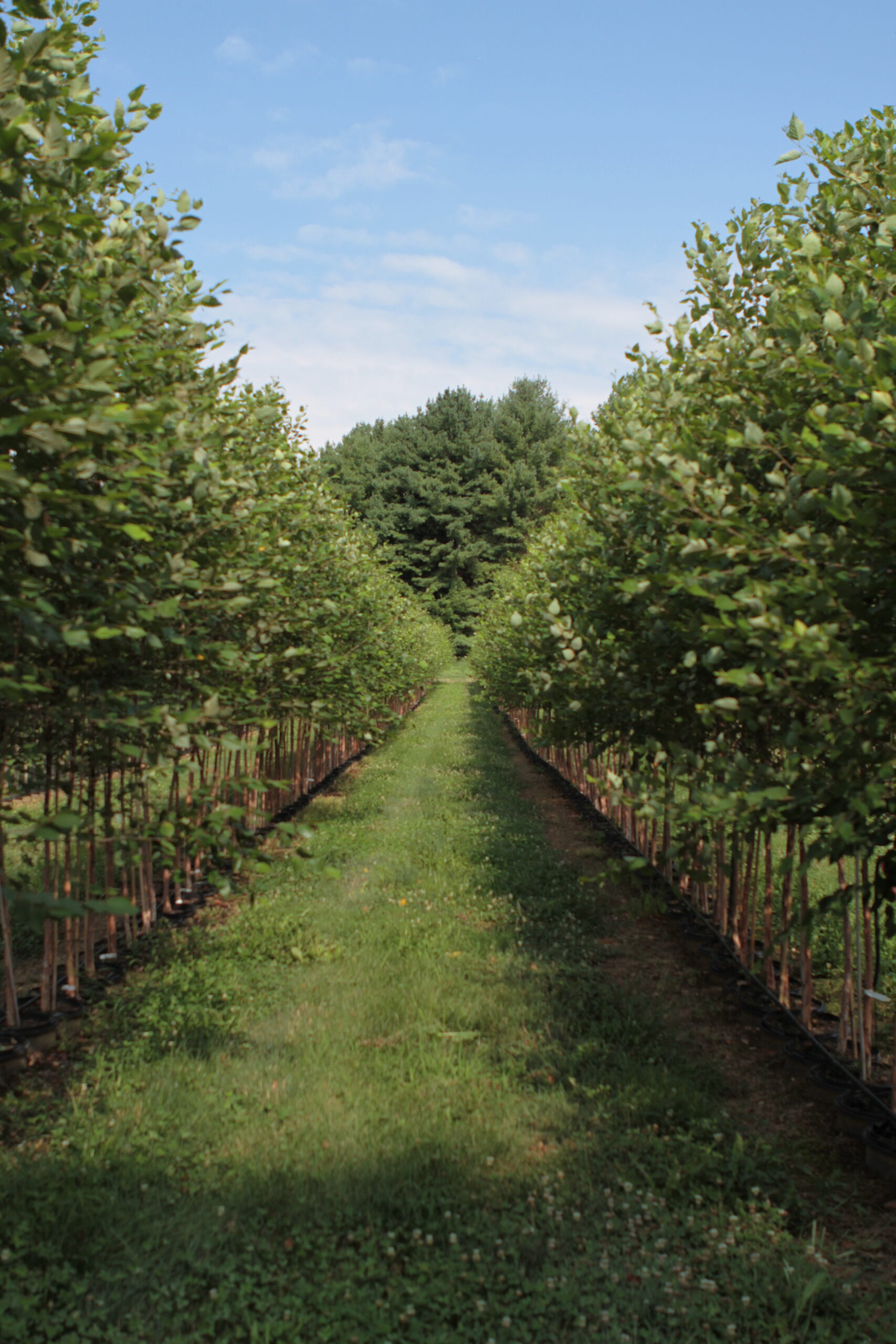
Grows 1.5 – 3 feet annually, getting anywhere from 40 – 70’ tall. This is a robust, fast-growing, medium-sized native tree which grows naturally in floodplains and near streams and riverbanks. As a landscape tree, they can be grown almost anywhere and ironically will tolerate both wetness and some drought, in a wide range of soil types. River birch can be trained as either a single trunk or multi-trunked tree. The multi-trunked growth habit is thought to be a more aesthetically pleasing, natural shape, and coupled with its pealing bark in varying shades ranging from gray, brown and even peach, river birch add interest to the landscape in all seasons, particularly in winter.
Tulip Poplar (Liriodendron tulipifera)
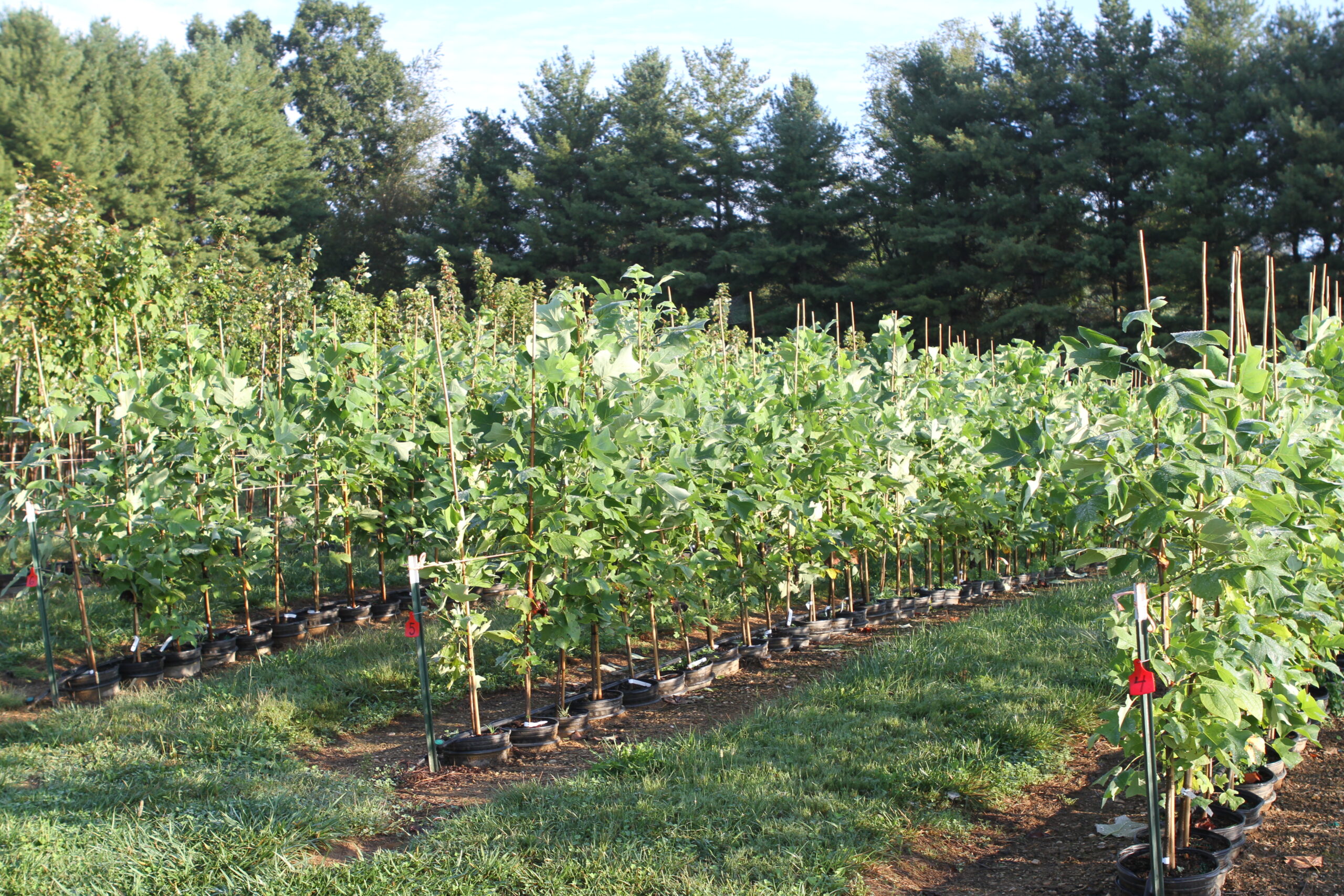
Grows to 60 – 90 feet tall at 3+ feet per year, this is a very attractive, fast -growing hardwood tree – One of our largest native trees. In spring, 2” showy, tulip-like flowers are sometimes missed because they bloom at the very top of the tree. Tulip poplars have smooth, waxy leaves that turn a bold bright gold come fall. Favored by nesting birds, they also host Swallowtail butterfly larvae and are a food source for hummingbirds. Fun fact – this “poplar” is not a poplar, but instead, a member of the Magnolia family!
Sweetgum (Liquidambar styraciflua)
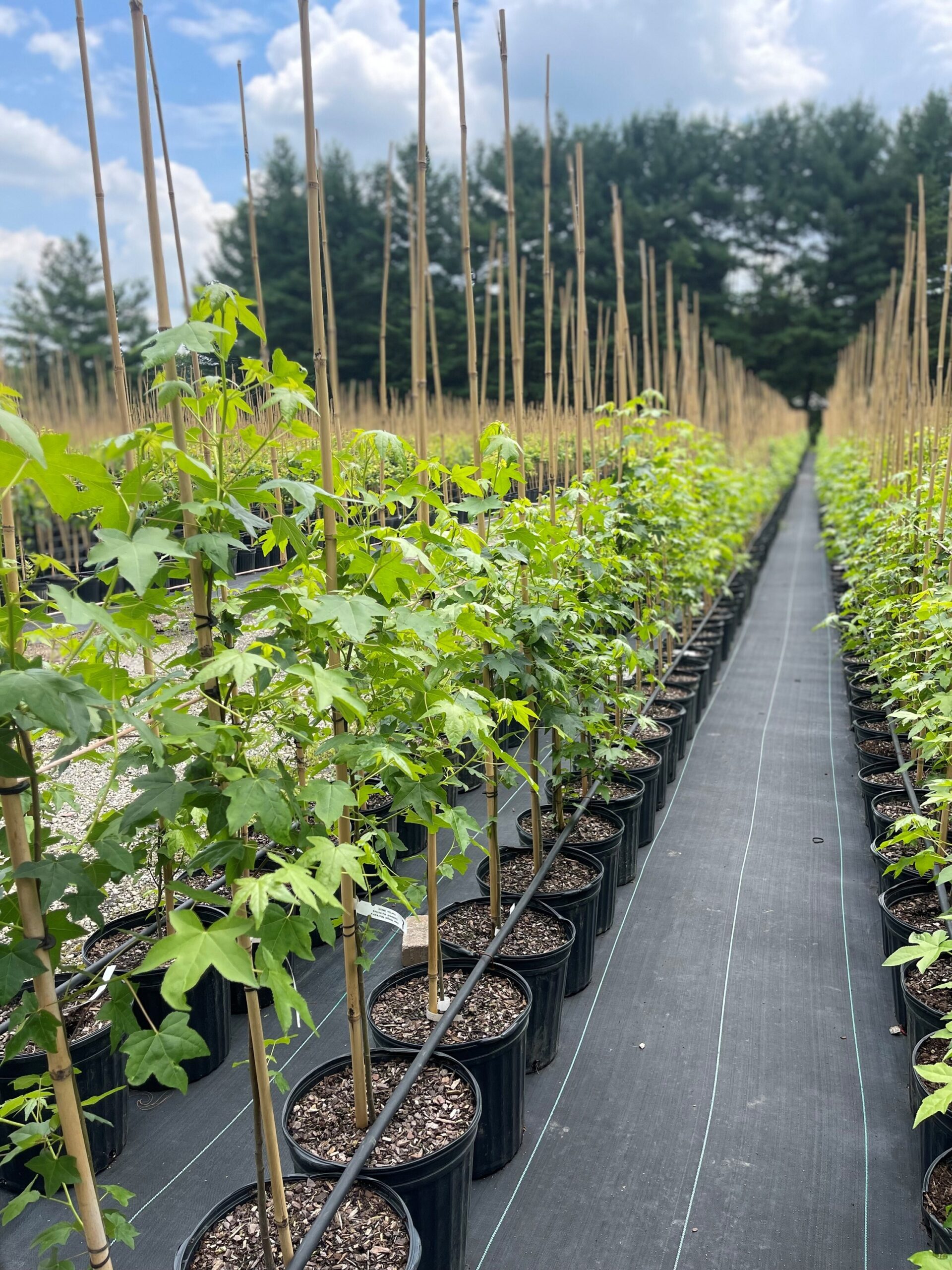
Grows 2 – 3 feet per year, and anywhere from 60 – 100 feet tall, the Sweetgum is an excellent shade tree and quite adaptable, tolerating a wide range of soil types and moisture levels. The glossy leaves are star shaped and showy in fall, turning bright red, purple, yellow and orange. Growing in a conical shape at first and then rounding out as they mature, Sweetgum are second only to Oaks as a hardwood timber tree — wood is prized for furniture, cabinetry, veneer, barrels and boxes. Fun fact – the gum in sweetgum comes from peeling the bark and scraping the resin-like solid gum and was used in the past in medicine and in chewing gum. Songbirds, wild turkeys and small mammals love the seeds.
Silver Maple (Acer saccharum)
Grows 3 – 7 feet per year and anywhere from 50 – 80 feet tall, this is a beautiful, fast-growing Maple whose leaves produce a lovely shimmer in even the slightest breeze, thanks to the underside being – you guessed it – silver! The bark can also look silver, especially when young. This tree grows in a vase shape, with a wide-spreading root system and a trunk that can grow quite large. This tree can adapt to many different soil types and conditions, and with a very wide spreading canopy, Silver Maples provide shade very quickly! Squirrels love the seed pods, and ducks & other birds use this tree as a nesting site. The leaves turn a light yellow in fall. Some people prefer the sugar quality of silver maple sap more than sugar maples!
Sycamore (Platanus occidentalis)
Grows 2 – 3 feet per year and up to 75 – 100 feet tall, Sycamores are one of the largest trees in North America. Their trunk diameter is known to grow larger than any other native hardwood and they can live up to 200 years, and their wide canopy provides shade fast. If you have a lot of space, this is a nice option! The brown bark of the tree falls off in irregular sheets as the tree grows, leaving behind a beautiful smooth inner creamy-white bark that really stuns in a winter landscape and, bonus, pesky vines can’t climb it! Sycamores can also help to reduce erosion by stabilizing soil. Bonus points for the songbirds who love Sycamore seeds!
While we no longer sell retail, we do sell to plenty of Maryland garden centers who source Natives (see list here) – Ask your local garden center to carry Clear Ridge Nursery Natives!