
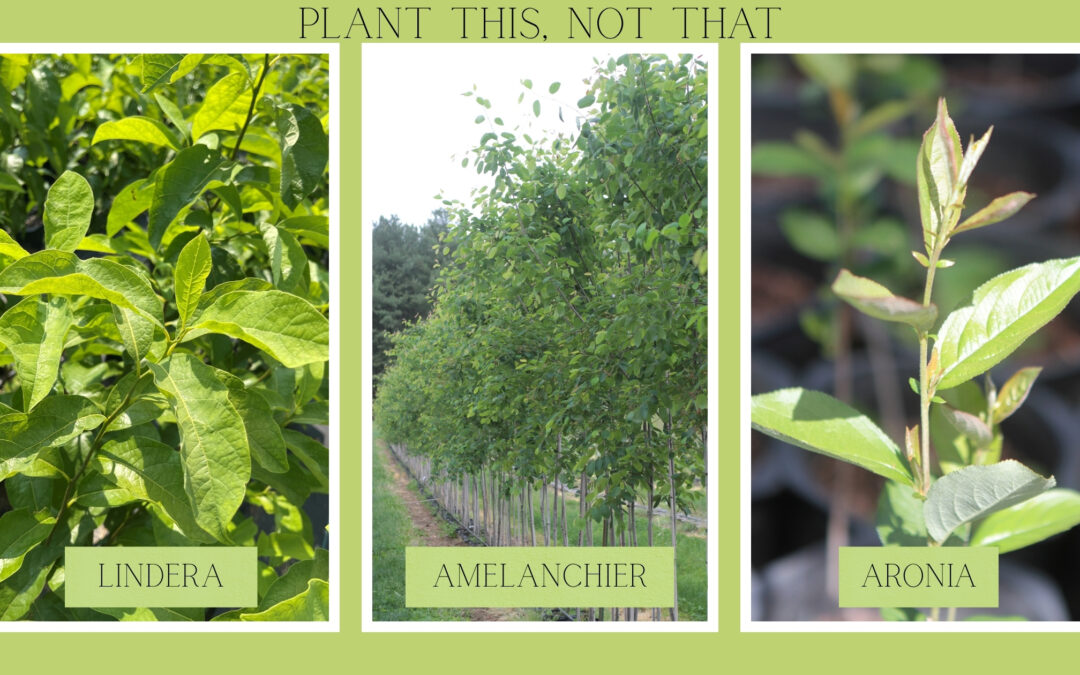
Great Native substitutes for the not-so-great invasives that have been banned in Maryland!
Chokeberry (Aronia arbutifolia)
Chokeberry (Aronia arbutifolia) – This is a multi-stemmed Native shrub that grows anywhere from 6 – 12 feet tall with all-season interest. Spring brings five-petaled flower clusters in white and light pink, which are followed by dense clusters of plentiful glossy red fruits which ripen in late summer which hang onto the plant through winter. Chokeberry tolerates a wide range of soils but prefers medium moisture. They can sucker and make good screens and hedges; Prune in late winter to maintain a vase-like shape, keeping in mind that berries form on second-year wood.
The glossy dark green foliage turns bright red in fall, and the exfoliating bark adds color and texture to the winter landscape. Available in our wholesale inventory.
*Plant Chokeberry instead of Invasive Burning Bush!*
Spicebush (Lindera benzion)
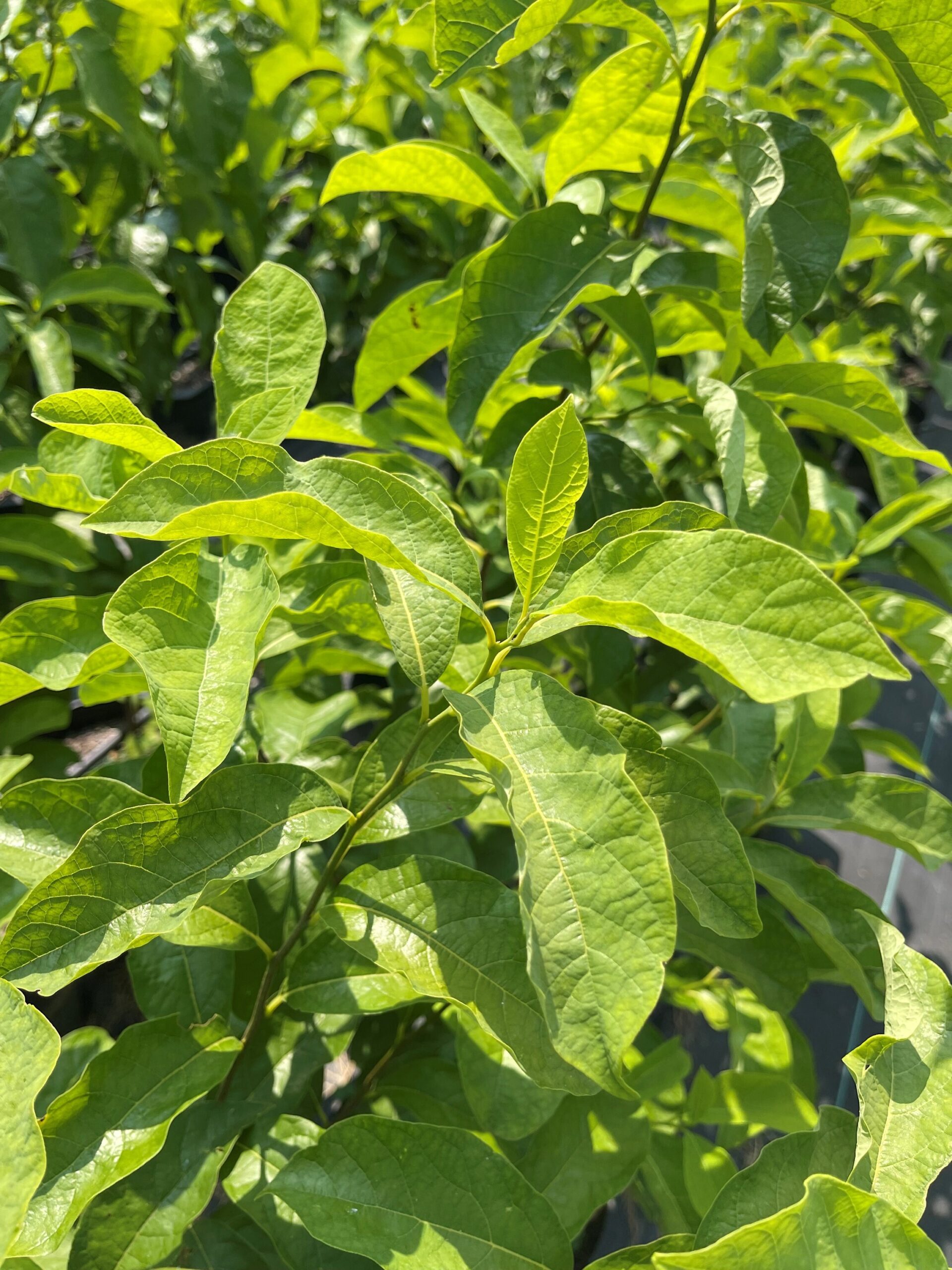
This is a LOVELY, fast-growing native shrub – The perfect addition to an area of the landscape with moist, well-draining soil with some shade – Sun helps with berry production and also with form. The leaves have a wonderful citrus smell, and can be used along with the twigs to make tea – They turn a colorful yellow-gold color in fall. Spicebush is a host to several species of swallowtails including the worlds cutest caterpillar – the spicebush swallowtail (don’t you just love a plant with a beneficial insect named for it?) This is also a highly deer-resistant plant – deer tend to avoid minty and citrusy-smelling plants.
The red berry “fruits” form after the tiny yellow flower clusters fade and share the same citrusy scent as the leaves. We are collecting spicebush seed to sell in 2026 – Inquire with our GM Amanda for more information!
Learn more about planting shrubs.
*Plant Spicebush instead of Invasive Honeysuckle or non-native Forsythia!*
Serviceberry (Amelanchier canadensis)
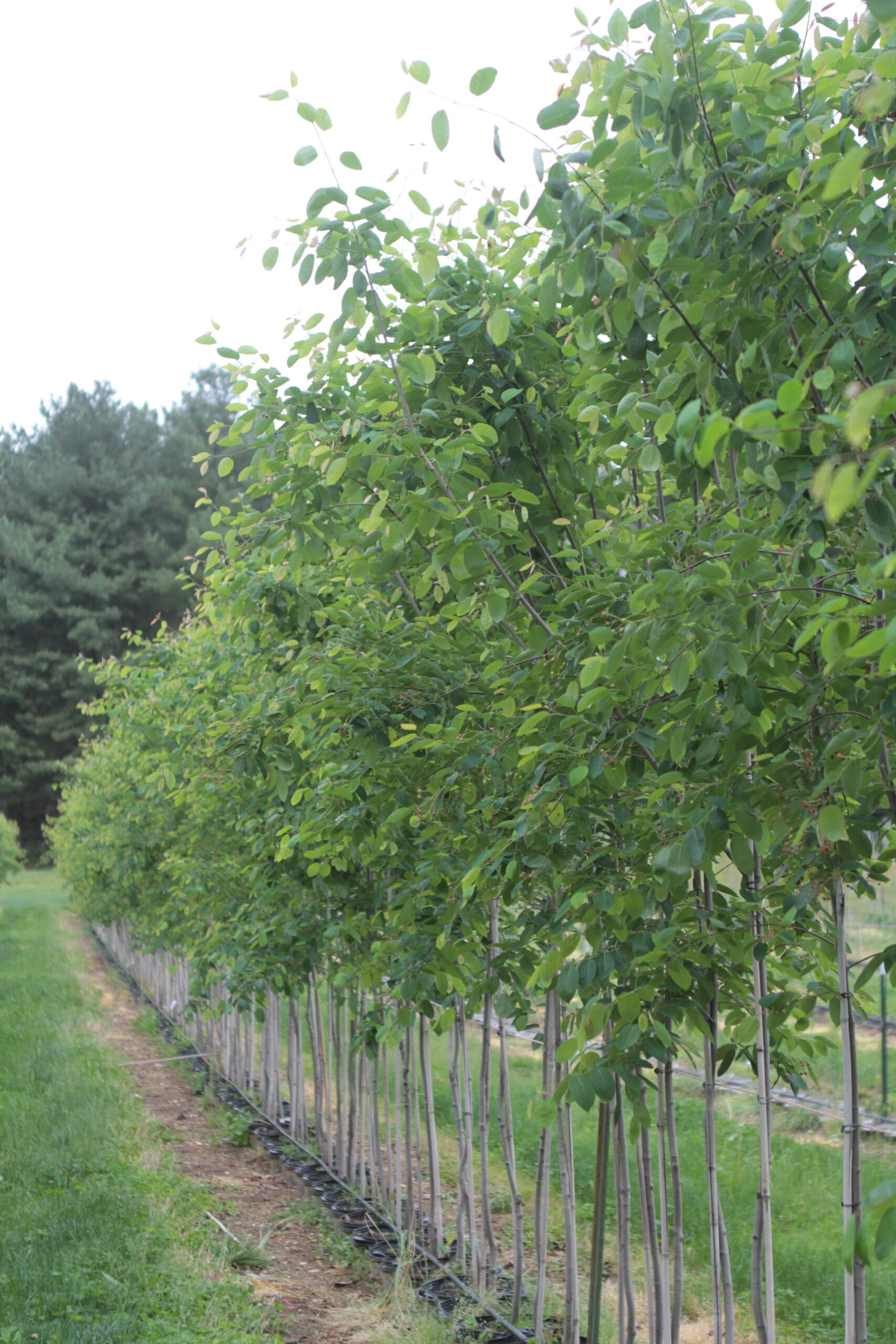
The serviceberry is a smaller-sized understory tree, typically growing 15 – 25’ though they can occasionally grow larger. They have a lovely shape and are highly adaptable to a wide range of soil types and conditions. Serviceberry blooms are showy, white, 5-petaled slightly fragrant flowers symbolic of renewal and new beginnings, and they give way to small edible berries (which ripen in late May/early June in our zone), and resemble blueberries in color, size and taste. This tree has a lot of nicknames – Juneberry, saskatoon, shadbush, sugarplum, among others. The leaves are elliptical in shape and a dark green when mature, turning red-orange in fall.
Serviceberry flowers are considered “perfect” meaning they are self-fertile, and can produce fruit with just one tree, though planting multiple trees, especially of different species, can lead to a higher yield of berries. We are collecting seed to sell in 2026 – Inquire with our GM Amanda for more information!
*Plant Serviceberry instead of invasive Callery pears!*