
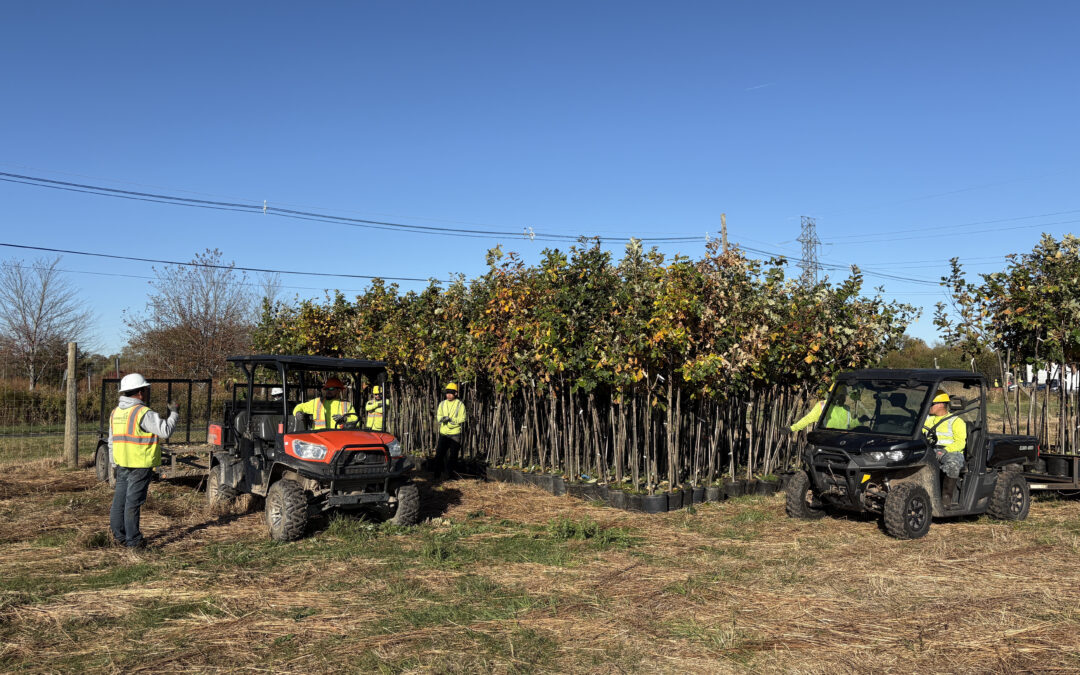
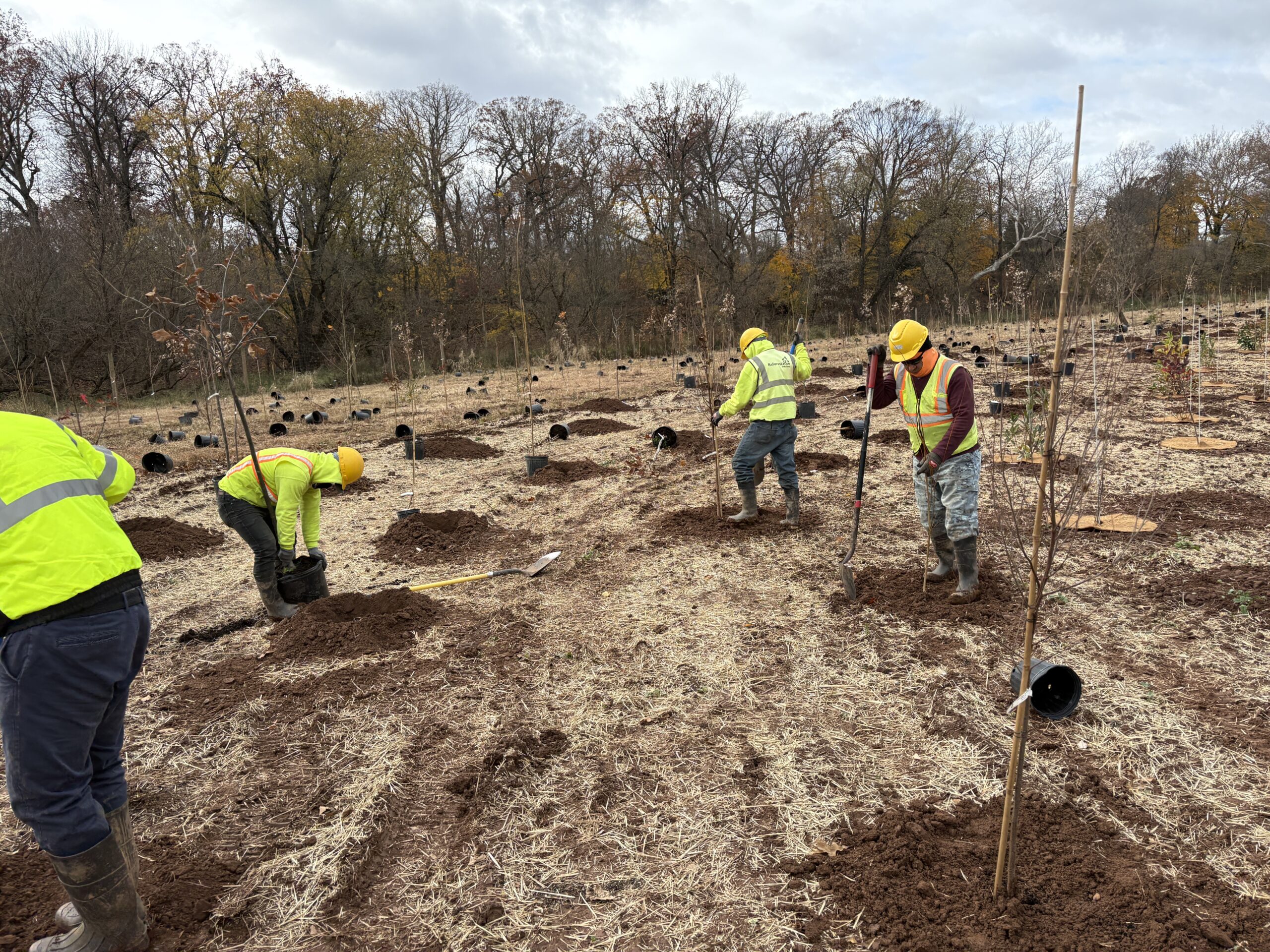
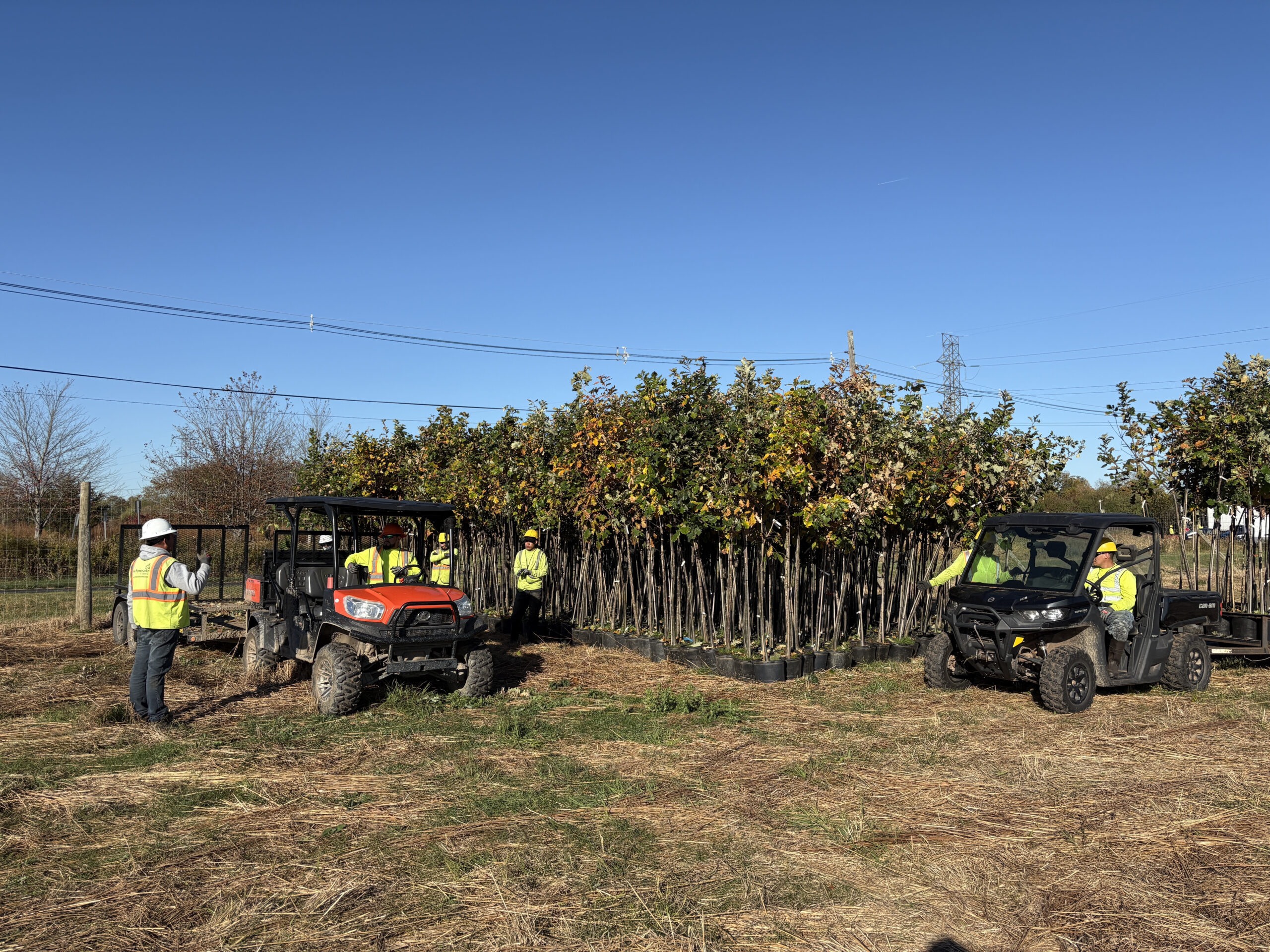
Reforestation projects require careful planning, quality plant material, and the right planting strategy to ensure long-term success. One of the most important decisions you will make is the type of tree stock used during planting. While bare root seedlings and small whips are commonly used, containerized trees often provide better survival rates, stronger root systems, and faster establishment in the field.
At Clear Ridge Nursery, we specialize in growing containerized native trees and shrubs that are designed to thrive in large-scale reforestation, mitigation, and conservation projects. Our nursery has been supplying high-quality plant material for decades and currently maintains over 150,000 plants across more than 70 species for restoration projects across the Mid-Atlantic region.
Choosing container-grown stock can dramatically improve planting success, reduce replanting costs, and help restoration projects establish healthy forest ecosystems faster.
“…I can unequivocally state that the stock that you are providing this project is far superior to the other nurseries, which makes me deeply thankful that it is Clear Ridge providing 90%+ of the tree material and 80% of the shrubs (that was my intent the minute I left your facility after the site tour). The health and the size of the stock you provided in the fall exceeded everyone’s expectations…”
–J.J., Hillsborough, New Jersey (100-acre reforestation project)
What Are Containerized Trees?
Containerized trees are grown in specialized containers at a nursery rather than harvested directly from field soil. This growing method allows trees to develop a dense, fibrous root system within a controlled environment before being transplanted to their final location.
Because the root ball remains intact when planted, containerized trees experience less transplant shock and typically establish more quickly after planting.
Containerized trees are commonly used for:
- Reforestation and afforestation projects
- Conservation and mitigation plantings
- Wetland restoration projects
- Riparian buffer installations
- Urban forestry programs
- Landscape and infrastructure projects
Wholesale nurseries like Clear Ridge Nursery produce container-grown plants specifically designed to perform well in restoration environments and conservation plantings.
Advantages of Containerized Trees in Reforestation
Higher Survival Rates
One of the biggest challenges in reforestation is achieving strong survival rates after planting. Bare root seedlings are often inexpensive, but they can suffer from transplant shock, root damage, and environmental stress.
Containerized trees maintain an intact root system during planting, which allows them to begin absorbing water and nutrients almost immediately. This significantly improves the likelihood that the trees will survive their first growing season.
When survival rates improve, the overall cost of the project decreases because fewer trees need to be replanted.
Stronger Root Development
A well-developed root system is critical to long-term tree health. Container-grown trees develop dense fibrous roots that expand quickly once planted, helping the tree anchor itself and access soil moisture.
This root structure also helps trees compete against surrounding vegetation and adapt to changing soil conditions. In many cases, containerized trees establish themselves more quickly than bare root alternatives.
For tips on proper planting methods, see our guide on how to plant containerized trees and shrubs.
Faster Establishment
Container-grown trees are typically larger and more mature at the time of planting compared to small seedlings. Because of this size advantage, they can:
- Grow above competing grasses and weeds faster
- Resist browsing damage from wildlife
- Capture sunlight earlier in the establishment phase
This faster establishment helps reforestation projects achieve canopy growth and ecosystem recovery sooner.
Greater Planting Flexibility
Another advantage of containerized trees is their flexibility during the planting season. Bare root trees are often limited to early spring planting windows, but container-grown trees can be planted during a wider portion of the growing season.
This allows project managers and contractors to better schedule planting work without being restricted to a short seasonal window.
Better Performance in Challenging Sites
Many reforestation sites involve difficult environmental conditions such as:
- Poor soil quality
- Compacted ground
- Drought conditions
- High competition from invasive plants
Container-grown trees often perform better in these environments because their root systems are already established and capable of adapting to new soil conditions more quickly.
In large restoration projects, this improved performance can mean the difference between a struggling planting and a thriving young forest.
Why Native Containerized Trees Matter
When planning a reforestation project, the species selection is just as important as the planting method. Native tree species play a critical role in restoring natural ecosystems because they support local wildlife, stabilize soil, and improve biodiversity.
Trees also provide major environmental benefits such as preventing soil erosion, regulating water flow, and creating habitat for wildlife.
Clear Ridge Nursery focuses on producing native containerized trees and shrubs that are well suited for conservation and restoration projects throughout the Mid-Atlantic region.
You can explore our full inventory of available plants on our wholesale products page.
Containerized Trees vs Bare Root Seedlings
Both planting methods can be effective, but containerized trees offer several advantages in many restoration scenarios.
| Feature | Containerized Trees | Bare Root Seedlings |
|---|---|---|
| Root Protection | Roots remain intact | Roots exposed during planting |
| Survival Rate | Typically higher | Lower in stressful environments |
| Size at Planting | Larger plants | Small seedlings |
| Planting Window | More flexible | Limited seasonal window |
| Establishment Speed | Faster | Slower |
Because of these advantages, many large-scale restoration projects are shifting toward containerized planting stock to improve long-term success.
Planning a Successful Reforestation Project
Every reforestation project is unique, and success depends on careful planning. Key factors to consider include:
- Choosing appropriate native species
- Determining planting density
- Selecting high-quality nursery stock
- Scheduling planting during optimal conditions
- Protecting young trees from deer or wildlife damage
Working with an experienced wholesale nursery can make this process much easier. Clear Ridge Nursery has decades of experience supplying trees for conservation projects, mitigation sites, and large-scale restoration efforts throughout the region.
Frequently Asked Questions
Are containerized trees better than bare root trees for reforestation?
In many cases, yes. Containerized trees often have higher survival rates and faster establishment because their root systems remain intact during planting.
When should containerized trees be planted?
Container-grown trees can typically be planted throughout much of the growing season, although spring and fall are still the most favorable planting periods.
How big are containerized trees used in restoration projects?
Sizes vary by project, but many wholesale nurseries grow container trees ranging from small 1–2 gallon containers to larger 10–15 gallon trees for larger planting efforts.
Where can I buy containerized trees for reforestation?
Working with a wholesale native tree nursery is usually the best option for large projects. Nurseries that specialize in conservation plantings can help select appropriate species and quantities.
Work With a Trusted Wholesale Tree Nursery
Clear Ridge Nursery has been supplying containerized native trees and shrubs for reforestation, mitigation, and conservation projects since 1994. Our experienced team works with landscape contractors, government agencies, conservation groups, and restoration specialists to provide high-quality planting stock that performs in the field.
If you are planning a restoration or reforestation project, our team can help you choose the right species and quantities to ensure long-term success.
👉 Contact us today to discuss your next planting project.