
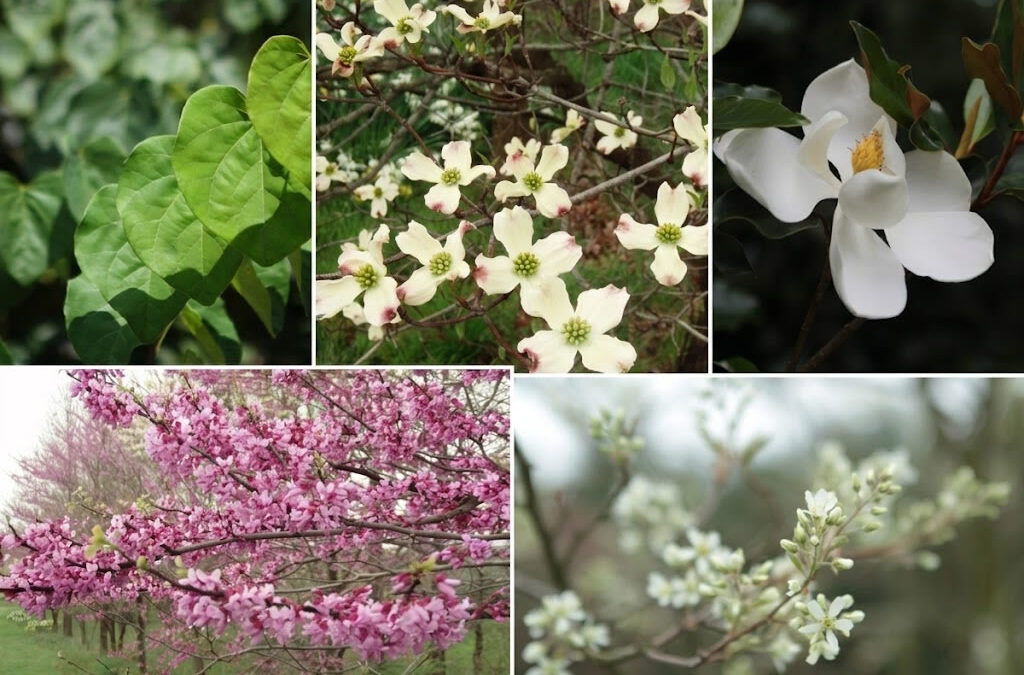
While these trees are often used as understories, they are also wonderful as stand-alone specimens in the landscape and are worth thinking about for your next landscaping project. Let’s take a closer look at some of these show-stopping beauties…
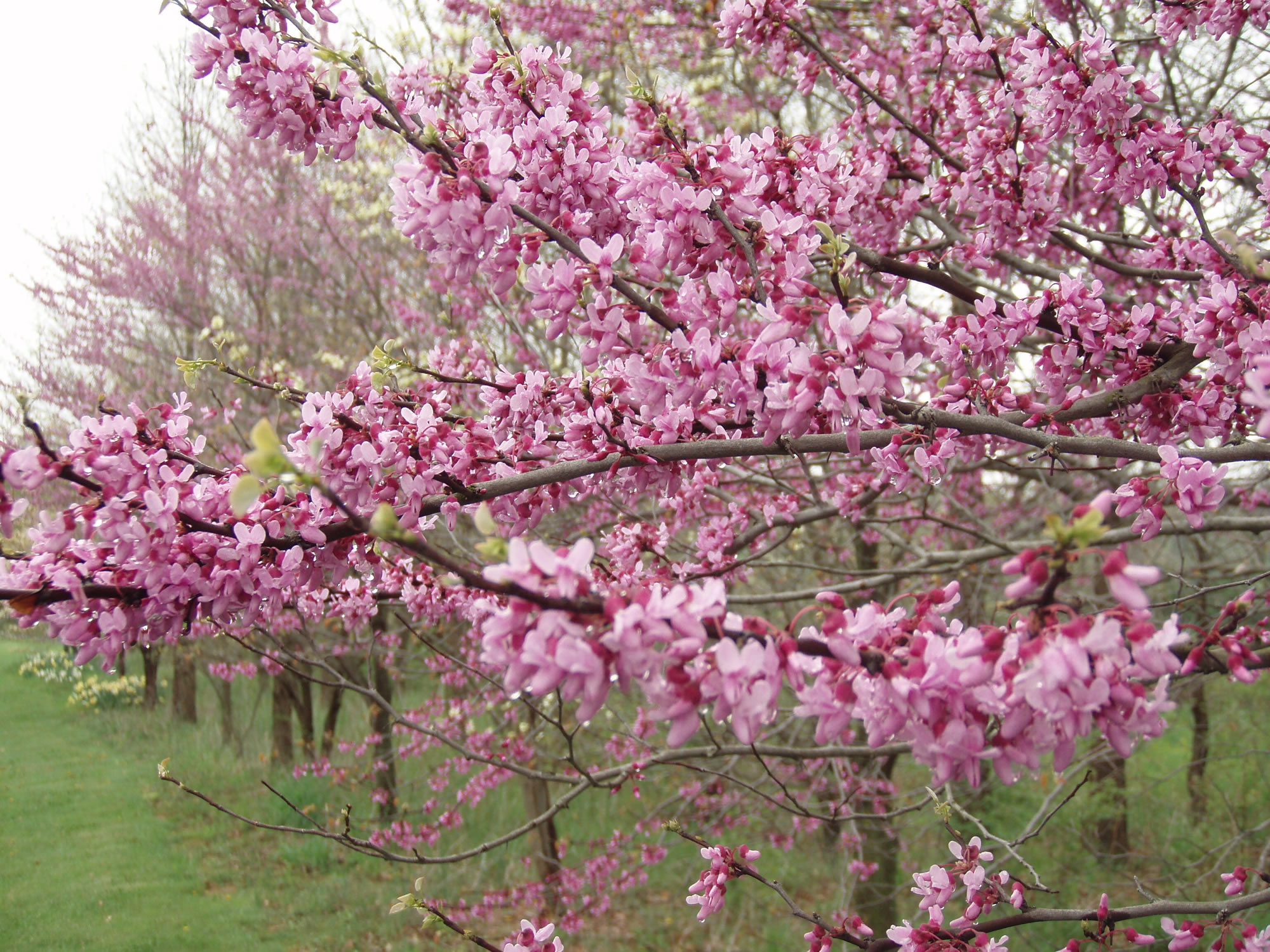
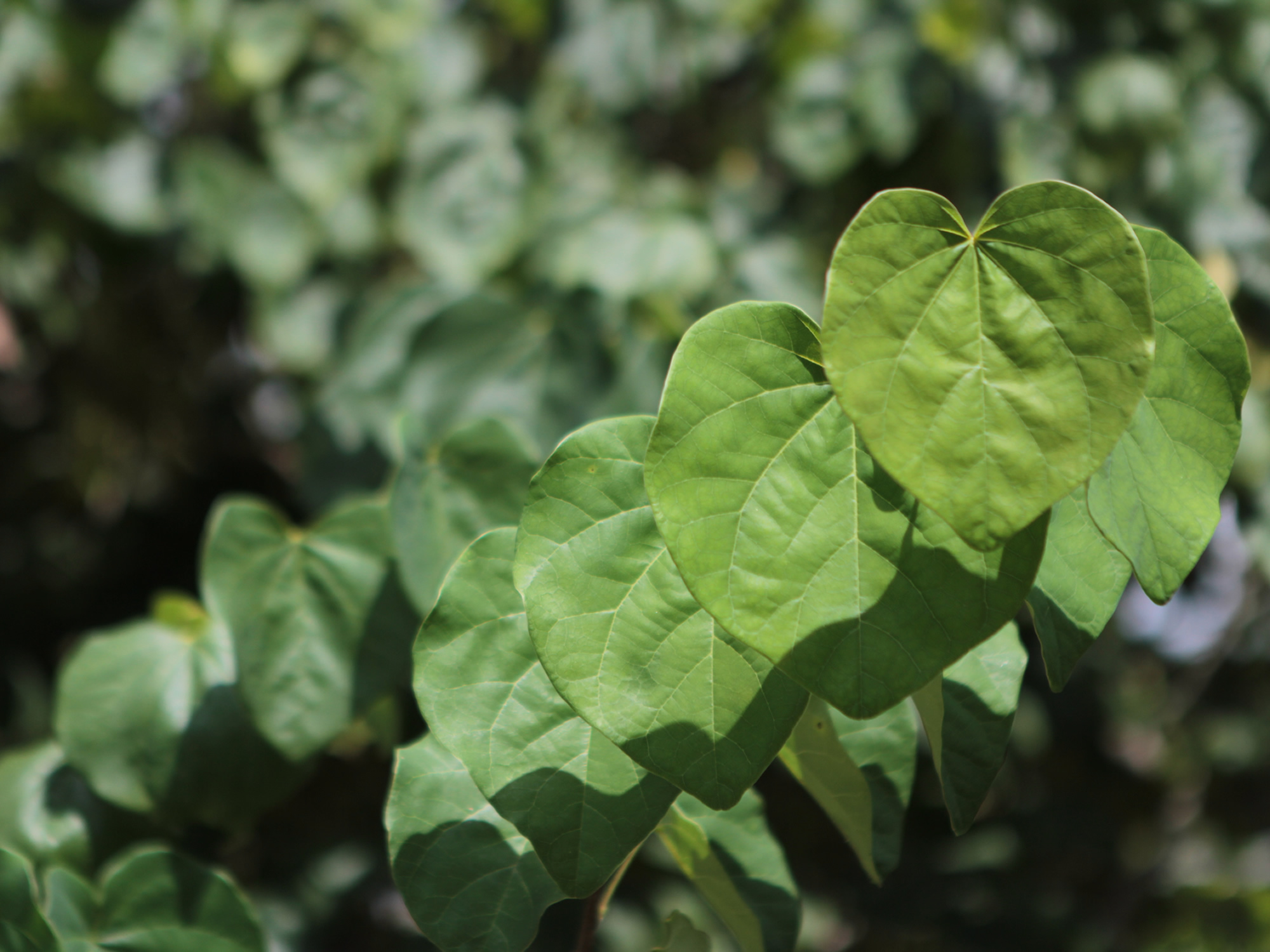
Redbud (Cercis Canadensis) – This Native tree heralds spring with its dramatic show of color. The redbud’s interesting, irregular branching and changing looks throughout the season make it a splendid choice to add to the landscape. These trees don’t mind a little afternoon shade — They are often found growing wild underneath taller trees in the woods – but they can handle full sun. Redbuds grow fast when young and then slow down, getting to around 30 feet on average, and can tolerate a wide range of soils but will grow best in neutral to slightly alkaline soil. Fun fact – This tree is in the pea family, and the blossoms are edible! These trees offer multi-season interest…After the showy spring blooms fade, the foliage that follows is heart-shaped and have a lovely cascading habit. In addition, seed-like pods appear after the tree blooms, and typically remain until fall.
Pagoda Dogwood (Cornus Alternifolia) – This is a superb, smaller-sized Native that adds four-season interest to the garden & landscape, growing 20 – 30’. The branches are horizontal and “Pagoda-like,” covered in fragrant small clusters of flowers that turn into blue berries, which will be devoured by many mammals, ground, water & songbirds alike. Sometimes called “Alternate-leaf dogwood”, this species has alternate instead of opposite leaves – The name Pagoda comes from the tree’s flat-topped crown and horizontal branches. This tree is also a wonderful substitute for the oft-requested and hard-to-find Sassafras.

Flowering Dogwood (Cornus Florida) – These are considered by some to be the loveliest of the native flowering trees. The bloom time is long, and butterflies and bees adore the flowers. Dogwood’s red fruit is also a food source for songbirds & wildlife in the fall. These trees have a variety of uses and provide interest in the landscape year-round. Dogwoods prefer slightly acidic to neutral, well-drained soil enhanced with organic matter, and can benefit from a bit of shade in the afternoon, though they are quite heat tolerant once established. These trees can grow 15 – 40 feet tall, at a rate of about 12” – 24” a year. What we think of as dogwood flowers are actually petal-like bracts, also known as leaves, which protect a tiny cluster of flowers where the bracts meet. Fun fact – Buds for next year’s flowers on Cornus florida actually form the fall prior, and can be seen through winter on these trees.

Allegheny Serviceberry (Amelanchier Laevis) is a smaller-sized understory tree – Typically growing 15 – 25’ though they can occasionally grow larger. The slightly fragrant, showy white 5-petaled blooms are symbolic of renewal and new beginnings, and the flowers give way to small edible berries which ripen in June and resemble blueberries in color, size and taste…They are also rich in iron. This tree has a lot of nicknames – Juneberry, saskatoon, shadbush, sugarplum, wild plum and wild pear among others. The leaves are finely-toothed and are a dark green when mature, turning red-orange in fall. This tree has great wildlife value both to birds and small mammals, as well as Native bees.
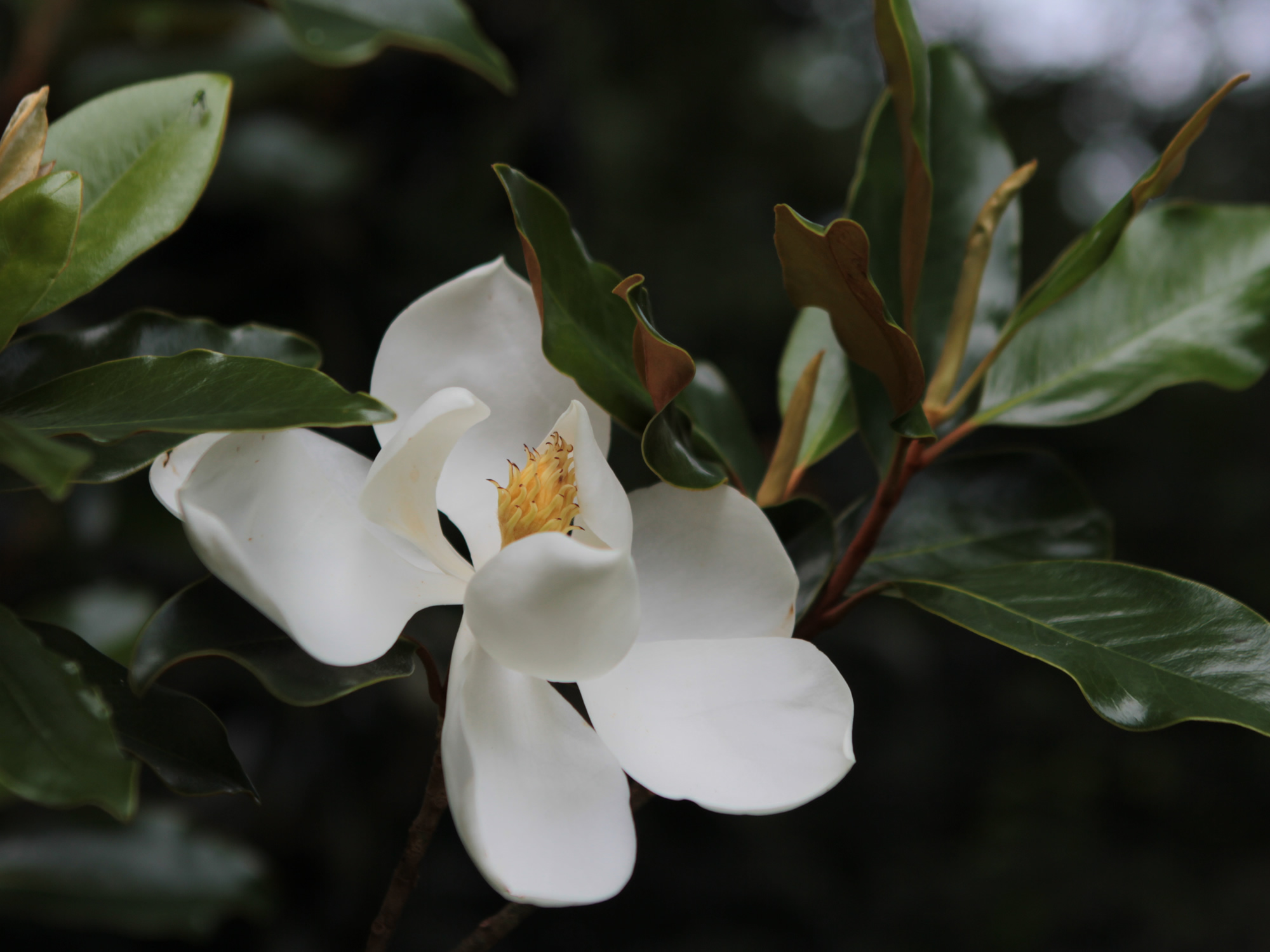
Sweetbay Magnolia (Magnolia Virginiana) – Who doesn’t love a Magnolia?! A lovely ornamental tree that stays on the smaller side, growing to around 20’ in the Maryland region (taller in the South), the Sweetbay offers interesting form, glossy semi-evergreen leaves, and we haven’t gotten to the flowers yet! The fragrant & large, showy white blooms open during the day and close at night for a few days at a time and have a long blooming “season”. The flowers give way to an interesting cone-like fruit whose seeds turn bold red and are enjoyed by birds.